
Performing the solar hybrid sulfur cycle right at the copper smelter could generate the oxygen and hydrogen to make the copper industry green
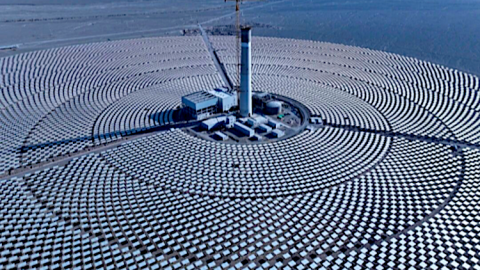
Northern Chile is known for having the best solar resource in the world for concentrated solar thermal (CST). And this region is also where about a quarter of the world’s copper supply is smelted.
Chile’s copper industry alone uses more than a third of the entire national power supply. And it is a dirty industry. For every ton of copper that gets to market, it generates about twice as many tons of CO₂.
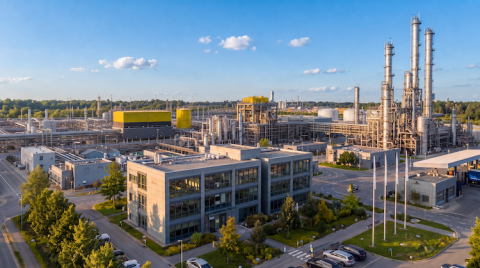
A team of Fraunhofer researchers in Chile believe that this means Chile’s copper belt is ideally suited to become the test bed for a new process that instead would generate both the green hydrogen and the oxygen the industry needs – directly at the copper smelter.
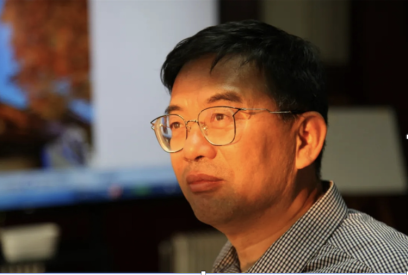
“This is why our hybrid sulfur cycle has such potential here,” explained Juan Sebastian Zuleta Marin in a call from Chile.
“With the hybrid sulfur cycle, we can produce both the hydrogen needed to reach the high temperature for the smelter, and also the oxygen that is required for oxidation.”
Idea: generate hydrogen and oxygen right at Chilean copper smelters
Marin sees this hybrid sulfur cycle as a way to use Chile’s strong solar resource to decarbonize copper production, cut energy costs, and produce clean fuel and oxygen at the mine site.
“The north of Chile is where most copper is produced in Chile,” Marin noted.
“And Northern Chile also has the highest potential in the world for these CSP technologies. So we have these two advantages, on the one hand the high DNI and also that most of the copper is produced in the north. So I strongly believe that in the north of Chile we have a huge potential for this technology.”

Northern Chile, particularly the Atacama Desert, experiences some of the highest Direct Normal Irradiation (DNI) levels in the world, with annual totals often exceeding 3,000 to 3,500 kWh/m²/year
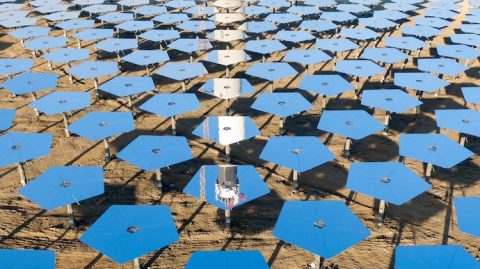
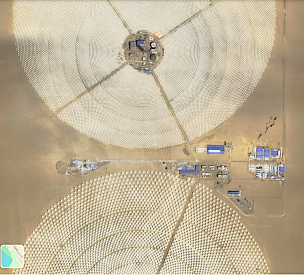
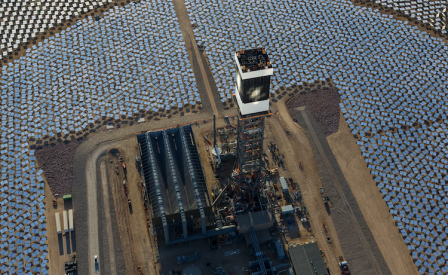
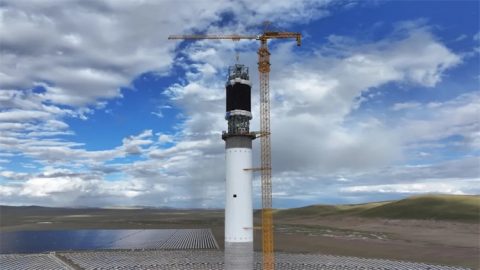
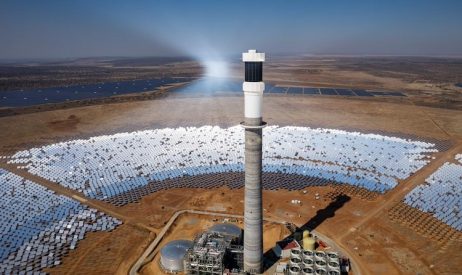
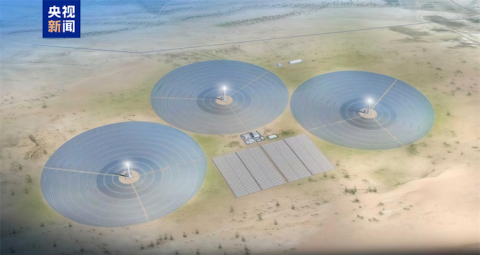
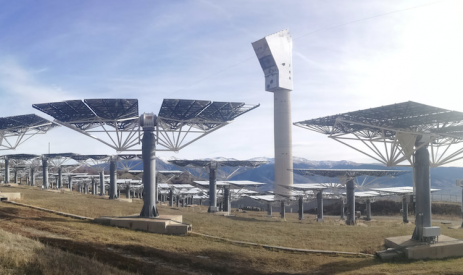
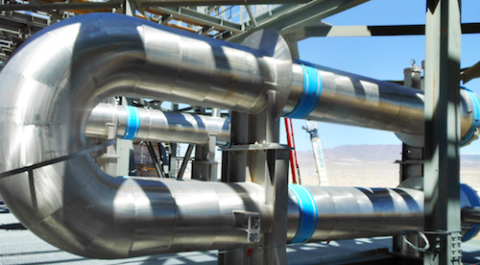
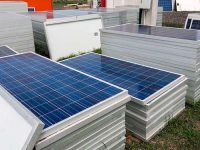
The idea that the Fraunhofer team presented at SolarPACES in Almeria, Solar-Assisted Hybrid Sulfur Cycle Using CSP and PV for Hydrogen and Oxygen Production in the Chilean Copper industry would be to use concentrated solar thermal (CST) to generate the heat for the thermochemical steps, and photovoltaic (PV) solar on site to generate the electricity for the electrochemical component. This runs the sulfur cycle to produce hydrogen and very pure oxygen right on site at Chilean copper smelters.
The advantage of generating oxygen onsite
Copper smelting requires oxygen.
Instead of buying oxygen made in energy‑intensive air separation plants, the smelter could make its own oxygen as part of the same solar-driven cycle that produces hydrogen.
Producing your own oxygen onsite with PV is more efficient than electrolyzing it from water with traditional grid power. There are energy losses from transport and conversion of grid electricity, by comparison.
The alternative for electrolysis would be to use grid electricity. But using solar onsite is more efficient.
“Onsite PV has a huge advantage compared with traditional electrolysis, mainly due to lower electricity consumption,” Marin said. “Traditional electrolysis operates around 1.2 volts, while this cycle operates closer to 0.4.”
Hydrogen; what is it good for?
Hydrogen is beginning to be used instead of fossil fuels in smelting processes. That is where the hybrid sulfur cycle can come in. It generates both the oxygen used and the hydrogen increasingly adopted to decarbonize smelter operation.
“Copper smelting is a pyrometallurgical process that requires high temperatures, around 1000°C, and oxygen,” Marin explained. “These are needed to drive the chemical reactions and oxidize impurities.”
The HyS sulfur cycle has a long research history
Researchers like Christian Sattler and others at DLR and at other research centers globally are exploring the sulfur cycle’s intrinsic advantages for the copper industry. In this thermochemical process, sulfuric acid can generate the hydrogen that is already being adopted in copper refining as a faster and more effective reducing agent than hydrocarbons in furnaces. This increases smelter productivity by shortening refining time. And when the hydrogen is produced with green energy like CST and PV, as in the HyS cycle, it can help decarbonize a very dirty industry.
How this hybrid solar version would work
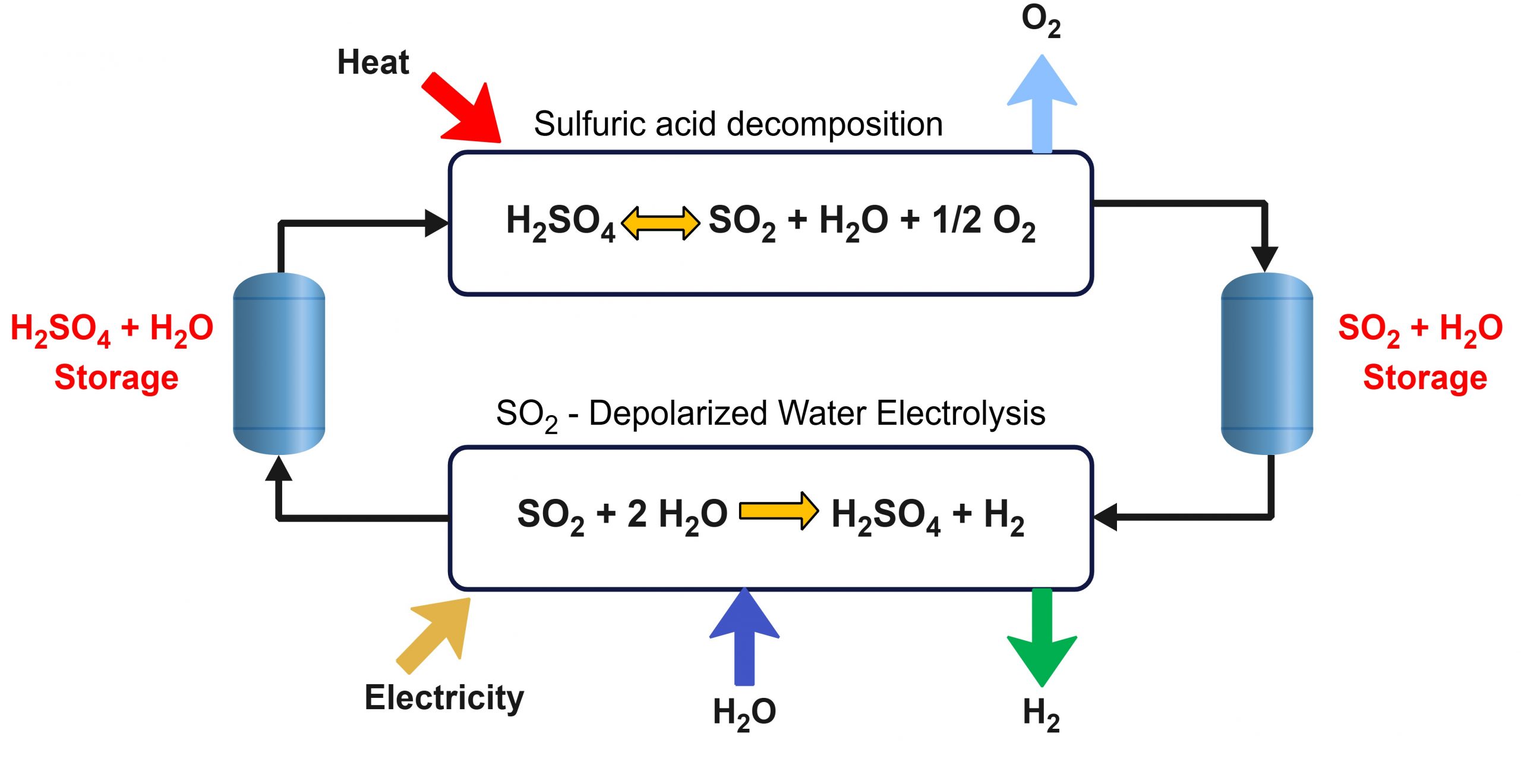
Both solar technologies would run a sulfur cycle in a chemical loop. Solar heat and solar electricity go in, hydrogen and oxygen come out, and sulfur compounds just cycle around inside the system.
Step 1. Using CST for heat: sulfuric acid is heated
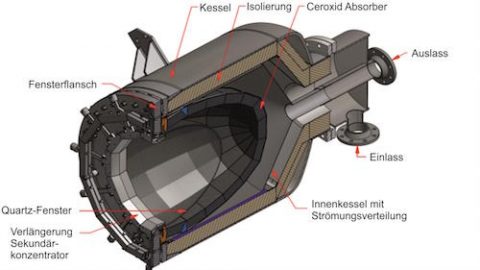
Sulfuric acid (H₂SO₄) is heated to about 600°C. It breaks into sulfur trioxide (SO₃) and water vapor. Then, at very high temperature, above 900°C, this sulfuric acid splits into sulfur dioxide (SO₂) and oxygen (O₂).
Step 2. Separate out the oxygen
The gas mixture contains sulfur species, water and oxygen. The oxygen is separated out for use in copper smelting on site.
Step 3. Using PV for electricity: electrolysis splits water for hydrogen
The sulfur dioxide reacts with water in an electrolyzer at about 100°C. This produces hydrogen and sulfuric acid again.
Step 4. Recycle the sulfuric acid
The sulfuric acid is reconcentrated and sent back to Step 1, completing the loop.
Managing solar intermittency
To guarantee operation when the sun is not available, Marin proposes that for the PV component, the emergency backup would simply be the electric grid, which now includes a lot of PV and a lot of grid-scale battery storage.
“Compared with other countries, we now have one of the lowest levelized costs of electricity for PV in the North of Chile. So we can take advantage of this low cost to increase the economic feasibility of the cycle,” he explained.
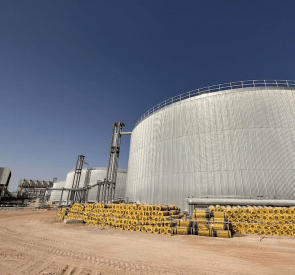
For the CST component, backup would be a typical thermal energy storage system storing the heat so the thermochemistry can run continuously.
Then as a secondary backup (and perhaps to reassure skeptical smelter operators) a gas-fired heater could mainain heat supply if the stored heat was depleted, though this is unlikely with properly sized storage given Chile’s high DNI.
“A challenge that we have to solve I will say is that most of the people in this industry don’t like these new technologies,” Marin observed.
“They have used fossil-based pyrometallurgical processes for more than 100 years. Transitioning to solar-driven systems is something we, as researchers, still need to work hard to enable.”
What is needed next?
This work is still at an early techno-economic stage and so the researchers do not yet address system sizing, or component issues.
“We need more research, for example in this cycle we work with a lot of corrosion,” Marin noted.
“Working with sulfuric acid creates major materials challenges. We also need government support. But we think this hybrid sulfur cycle has real potential in Chile, both as the world’s leading copper producer and also the highest solar potential.”
There is a precedent where even the most carbon-intensive industries have had leaders emerge who blaze the trail for a cleaner future. Leaders in other heavy industries, companies like ArcelorMittal, CEMEX, and Maersk, and have led their industries in a shift away from fossil fuels. Perhaps an Atacama copper smelter harbors a first mover who might similarly step forward to green the copper industry in Chile.