
Abstract:
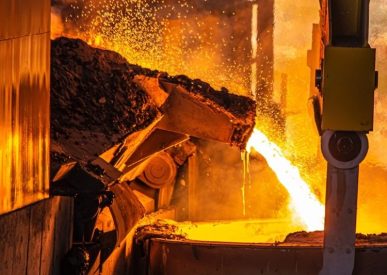
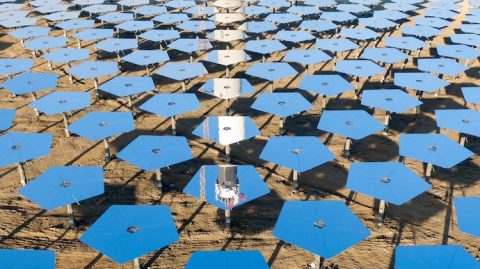
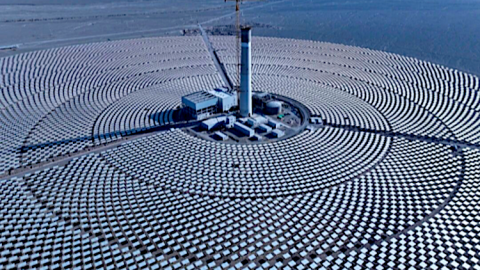
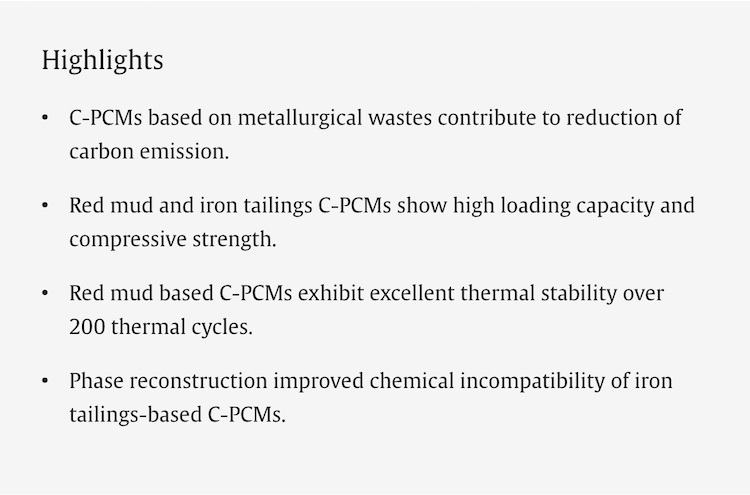
Solid waste-based heat storage materials are attractive due to their low carbon emission and cost effectiveness, demonstrating significant potential for application in concentrated solar plants and waste heat recovery. In this study, steel slag, red mud and iron tailings were used as three types of metallurgical solid wastes to develop form-stable composite phase change materials (C-PCMs) for high temperature (≥600 °C) thermal energy storage in combination with NaCl-Na2SO4 eutectic salt. The thermophysical and mechanical properties of the C-PCMs were comprehensively investigated. Results showed that both red mud and iron tailings had better salt loading capacity than steel slag, which could effectively encapsulate 50 wt% salt without leakage. And these two C-PCMs also exhibited excellent compressive strength of 90 MPa and 81 MPa, respectively. In particular, red mud based C-PCMs showed a phase transition temperature of 625 °C and latent heat of 70 J/g, which only decreased by 2.8% after 200 thermal cycles, indicating good thermal cycling stability. By contrast, iron tailings based C-PCMs initially had lower latent heat of 48 J/g at 622 °C due to the reaction between SiO2 and Na2SO4, but its latent heat increased significantly by 66.6% to 80 J/g after 200 cycles through self-reorganization of the phase during thermal cycling. The results of this work might lay a solid foundation for further exploration of metallurgical solid waste in high temperature thermal energy storage, thereby significantly contributing to carbon emission reductions in both the resource and energy sectors.
Feng Jiang, Hao Wang, Dejian Pei, Tongtong Zhang, Jian Song, Yi Jin, Xiang Ling, Metallurgical solid waste-derived skeleton enables shape-stabilized phase change materials with robust properties for high-temperature (≥600 °C) thermal energy storage, Solar Energy Materials and Solar Cells, Volume 300, 2026, 114272, ISSN 0927-0248, https://doi.org/10.1016/j.solmat.2026.114272