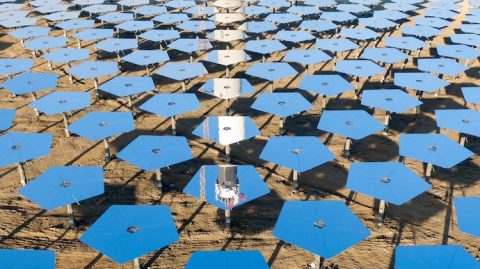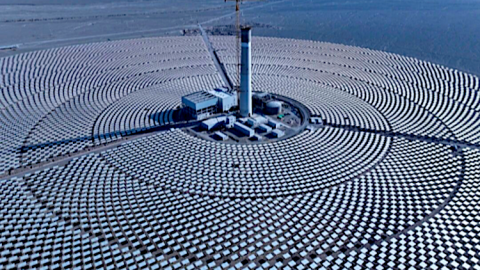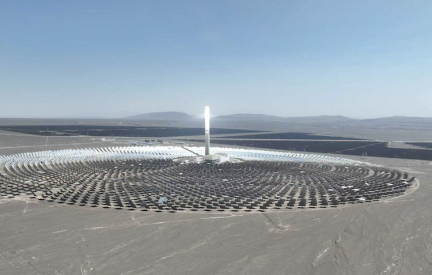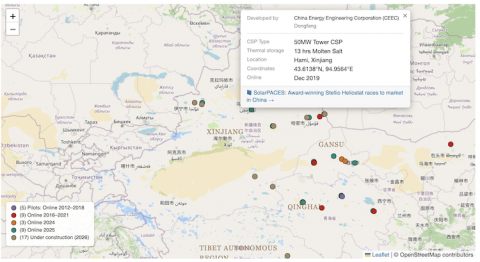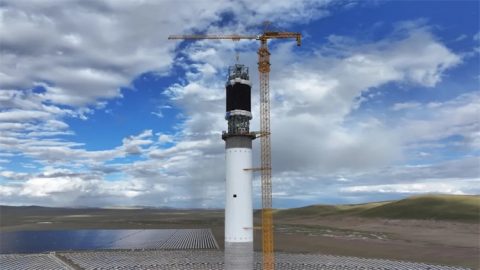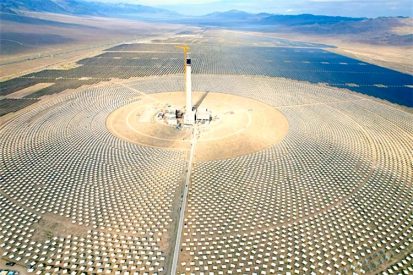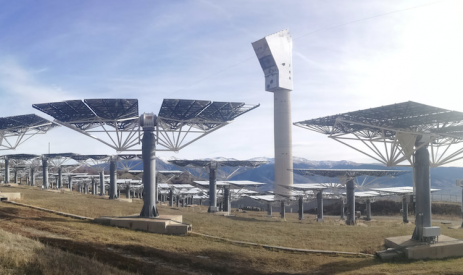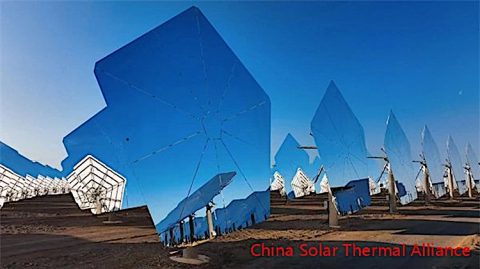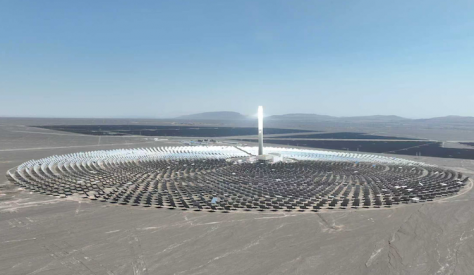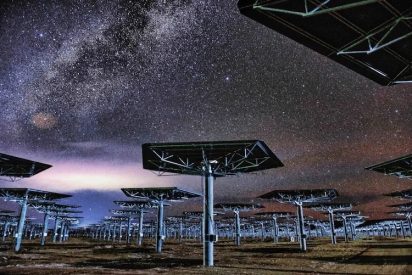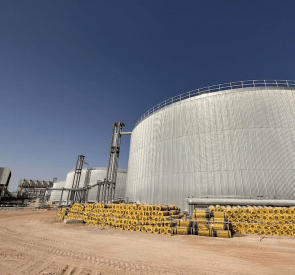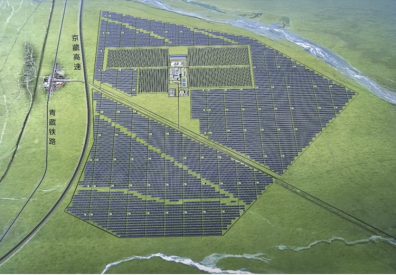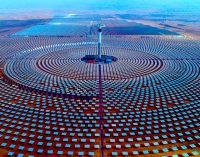

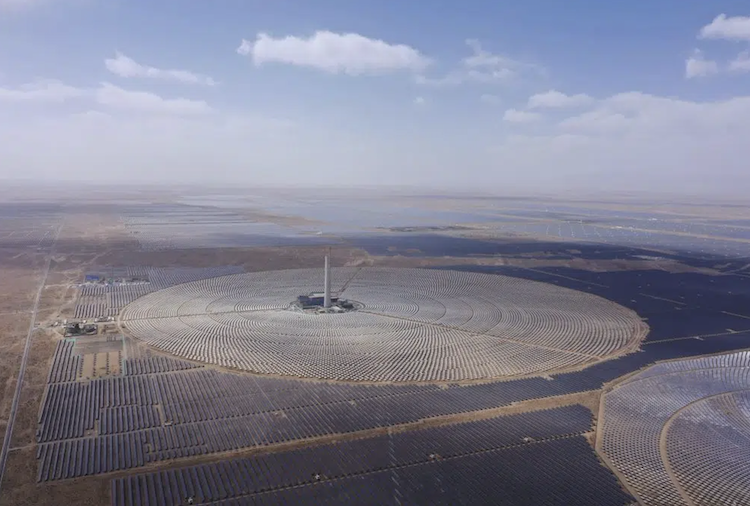
With China’s massive state-owned enterprises (SOE) like China General Nuclear, PowerChina and Three Gorges (famous for the 22MW dam) completing 26 full-scale concentrated solar power (CSP) projects in the last few years, and with even more than that under construction, the country is the new global leader in CSP deployment.
I have many questions, like why, when China has such a world-leading position in batteries, these SOEs include 8-16 hours of thermal energy storage from CSP in their huge new renewable energy parks.
So I caught up with Shanghai-based CSP energy insider Sunny Sun, General Manager of China’s CSPFocus, who previously provided SolarPACES an excellent overview at an earlier stage of China’s CSP development.
Susan Kraemer: For concentrated solar power with thermal energy storage (CSP+TES) what are the latest bid prices you are seeing now in China?
Sunny Sun: The government of Qinghai just announced the bid winners and confirmed that Zhongguang New Energy (or Helius, partner of Cosin Solar) won one of four projects (each a 300 MW standalone CSP project) with the lowest tariff of RMB 0.47/kWh.
The tender was for four standalone CSP projects, each with a capacity of 300MW, and bidders were to submit bidding documents with the tariff they require.
That’s the background of the RMB 0.47/kWh tariff won by Zhongguang New Energy/Cosin. And the tariff for the other three finalists ranged from RMB 0.48 to RMB 0.52.
SK: So in USD, that’s just 6.9 cents a kWh.
SS: This CSP tariff of RMB 0.47/kWh in the latest tender is a new benchmark. And with more CSP projects under development and construction, the industry will enjoy economies of scale, further reducing overall costs.
With its long-duration storage in molten salt TES, CSP has already proved its advantages and reliability in recent years, as more CSP plants are coming into operation and the performance is getting better and better.
And as confidence in CSP grows, more CSP projects are planned and developed in western China, where land and solar resources are abundant. With all these projects, the LCOE of CSP has declined dramatically.
So the CSP tariff has decreased from RMB 1.2/kWh in 2016 to RMB 0.47/kWh in the latest bidding in 2026, a remarkable decline.
SK: Do you expect the generation costs of CSP with TES to continue to decline, or do you think we’ve hit an endpoint?
SS: No, I do believe there is still room for further reduction of the LCOE of CSP. In the past 10 years, even with less than one gigawatt of installed CSP capacity, the tariff decreased by almost two-thirds. It took the PV industry more than 20 years to achieve such a significant reduction.
SK: How does that tariff compare to what coal power plants earn now?
SS: It’s different. In places like Qinghai Province, there are abundant natural resources, like Solar and Wind, so they don’t need to worry about the power supply during the day, as there are a lot of PV and Wind power plants there.
But at night, the local government needs to pay a much higher price from the grid, over 0.5 RMB/kWh. So the local government is very happy with a tariff of RMB 0.47/kWh to CSP developers, as it is even lower than the current grid price.
But in some other provinces, the tariff for coal-fired power plants is lower than 0.47 RMB. However, I think that in 2030, the CSP tariff will be much lower, like 0.4 RMB.
SK: With so many commercial full-scale CSP projects running in China now – all with storage – have Chinese engineers solved that leaking tank problem? Of the only five full-size commercial projects the US built, one was offline for eight months due to a tank leak.
SS: I don’t think we can say they have solved this leakage problem for now, because most of the tower projects with molten salt storage have been in full operation for only three to four years. Okay, so at least for the time being, we cannot say they have solved the leakage problem.
But Chinese engineers learned lessons from failures that occurred outside China. So there’s been some optimizations of the design and installation of the salt tanks.
SK: They were also not going to make the same mistake of Ivanpah – having no storage.
SS: Yes, from the very beginning, we knew we needed storage for CSP. Our first round of projects required at least 6 hours of storage, because that’s the inherent advantage of CSP. It doesn’t make any sense not to store the energy.
SK: And the national government still requires CSP to include storage, right?
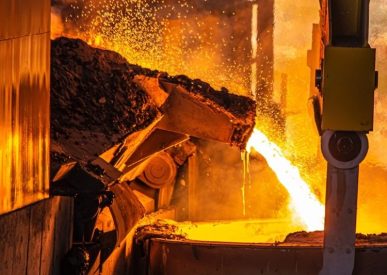
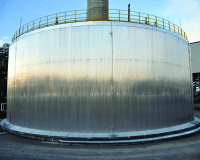
SS: Yeah, that’s the idea. During the tendering process for these large renewable energy complexes, the governments said that you needed to include CSP with long-term storage. Also, in China, molten salt storage is not just a standard configuration in CSP plants but is also used in other energy-intensive industries, such as steel, chemical, and aluminum.
Also, in coal-fired power plants, molten salt TES was used to absorb energy from the coal boilers when the grid did not need electricity from the plant during the daytime, making room for PV or wind power.
SK: Has that wider industry deployment helped? Had these other industries engineered solutions over time?
SS: Molten salt has been widely used as heat transfer and storage media in the past, so engineering and design institutes have abundant experience dealing with it, like in nuclear power plants, chemicals, etc. This also helps the application of molten salt in CSP. Take the coal power plant as an example. By equipping a molten salt storage system, they can improve power generation efficiency and increase production or generation.
SK: China is the world’s leading battery producer. How does the cost of thermal storage at eight hours or more compare to the cost of batteries for that duration?
SS: I don’t have the exact number, but as far as I know, if we are talking about 8 or more hours of storage at a large-scale renewable complex, thermal storage has a much greater advantage than batteries. For batteries, to cover a long duration, you need a huge number of small batteries put together. So, on the one hand, the hardware cost will be rocket high. On the other hand, the safety risks also go higher with so many batteries at the same site.
SK: Are there, in fact, no batteries at these 1GW or more renewable complexes? Is CSP the only storage?
SS: No, I think most of them do have at least some battery capacity – though it depends on each renewable energy park – because batteries respond very quickly. They can respond to the grid demand in seconds.
So, the battery is a very, very good fit for short-term storage, like two hours, maybe four hours. I think the battery can fit this scenario very well. But if you are talking about six hours or more, I think thermal storage has more benefits economically and technologically.
Both play important roles in achieving a higher share of renewables in the energy mix.
SK: So a couple of Chinese news stories mention PV-CSP hybrids or hybridization, like the 200MW Cosin is building for China General Nuclear at Delingha – it has hybrid storage for 100 of the 900 total megawatts of the PV there. The PV is not merely co-located at the same park. Does the PV feed some electricity directly into the hot tank to heat the thermal storage?
SS: When they have a hybridization with PV and CSP, yes, definitely they will use the electricity from PV plants to heat up the molten salt in the tank, because the idea for this hybridization is that sometimes when there’s too much PV output, the grid cannot take it all, due to the limit on the grid capacity.
And if you have thermal storage, you can definitely use PV generation to heat the storage, so you don’t waste any solar energy.
SK: I wonder how they handle storage payments when two technologies share storage? Might the PV developer pay the CSP developer on a per-MW-stored or per-hour basis, or what?
SS: Not like that. Actually, it is the same owner/developer for the renewable energy complex.
For these tenders, generation from the entire new energy park is paid at market prices. So for these complexes they own, they get the same price for all the renewable energy from the whole complex.
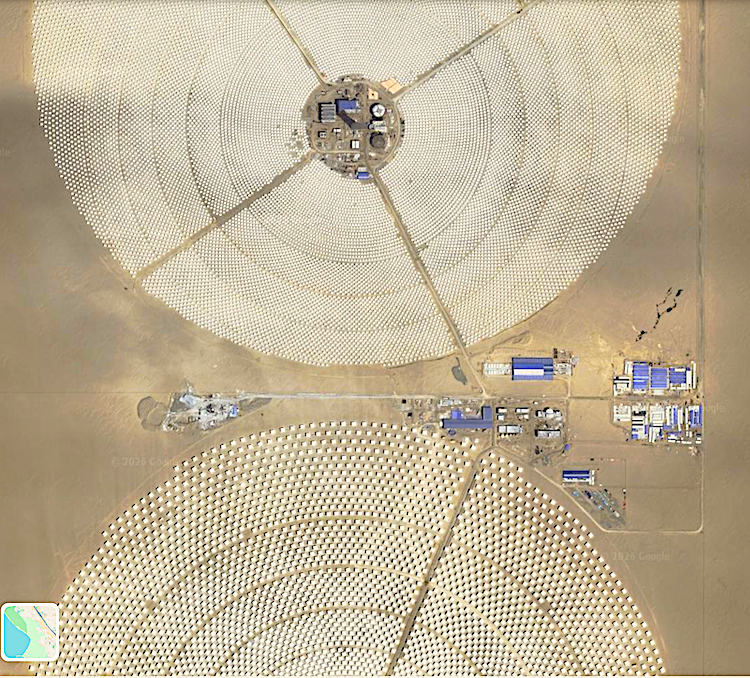
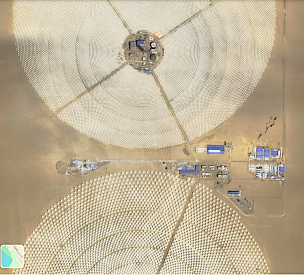
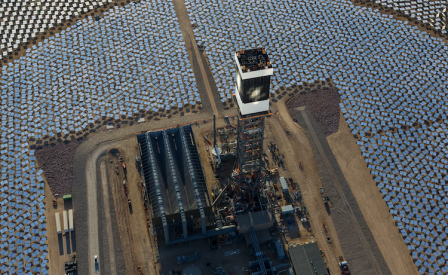
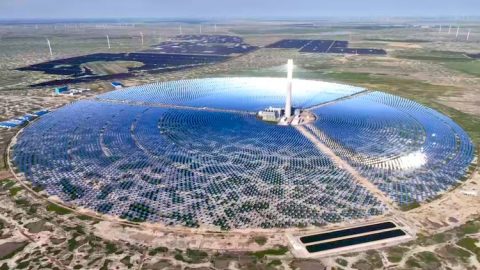
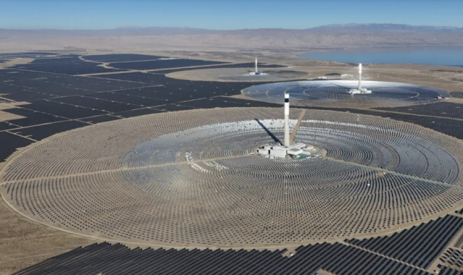
SK: Can you tell me about this apparently twinned solar field at the Wutumeiren solar complex in Qinghai Province?
SS: Both of them belong to Three Gorges, but even though they look like twins, they actually belong to two consecutive rounds of tenders.
The Qinghai local government issued two tenders at different times. So these two projects are from two tenders from two technology providers in two consecutive bidding rounds.
Cosin is the technology provider of the upper one, providing the solar field and the collection system, and the one below is Shouhang.
SK: But why is the power block between them?
SS: It’s actualy not. Each has its own power block under their tower. In the middle, they share the administration building and the water treatment.
SK: So, Three Gorges is kind of pitting these two to compete in the same location with the same DNI.
SS: I’m not sure whether this is one of the developer’s intentions in putting these two together. But definitely it will be very interesting to find out the generation comparison when both projects are in full operation.
SK: You mentioned the 50-megawatt Cosin at Delingha and the URAT project in Mongolia have done very well, but so many others seem to be breaking daily records, too, right?
SS: As far as I know, these two are the only projects that have reached the annual design output in recent years. Other projects may reach the design output at times, for example, by breaking a record of continuous performance, but to maintain that performance for several years, these two have been the most outstanding projects.
SK: How does the cost of building a coal power plant compare to the cost of building CSP with thermal storage in China?
SS: I think that currently, coal power plants are much cheaper to build. But if you consider the emissions and the environmental fees… Provincial governments currently do not charge for these emissions from coal power plants, or maybe they do, but not enough.
SK: Does China have an emissions target?
SS: Yeah, currently we have these kinds of emission targets, so we need to control emissions. We already promised to reach the summit of our emissions by 2030.
This is a national policy, so all these industries, these heavy emission industries like coal plants, steel plants, chemical plants, they all need to reduce their carbon footprint.
SK: Is there any policy to reach that target?
SS: Yes, there’s a national policy of prioritizing renewables. According to our regulations, the National Grid has to take electricity from renewable energy sources first. Renewables have priority on the grid.
SK: Oh, so that’s like the Merit Order in I think it’s Germany?
SS: Yes, however, there are still limits to the transmission lines’ capacity.
SK: Though it looks like huge new Ultra-High-Voltage transmission lines are now being built to all these huge solar parks out in the desert plateaus… So, with China’s ‘Merit Order’, does coal get curtailed?
SS: Coal plants do have to curtail their output during the day. That’s not good for coal plants; They have to reduce their load by 20%, 30%, or 50%, which is a loss for the coal power plants and also not good for the turbine.
And maybe they need some thermal energy storage too, for daytime, exactly, that’s why more coal power plants build a thermal storage system.
So, when they are not allowed to export electricity to the grid during the daytime, they use the molten salt to store the energy, and extract it when it is needed.
SK: It seems in China, it’s easier to develop clean energy because you can rely on climate policy continuing. There’s no risk of reversing course on renewables.
SS: Yeah, I don’t think that’s gonna happen, because we have a very consistent policy, so I don’t think we need to worry about the risks for policy change, like what happened in Spain and the US.
SK: Yes, no new government is going to cancel half-built projects out of spite, like those huge offshore wind projects Trump canceled in the US. That has to give other entrepreneurs pause… So, last question: I wonder if China might eventually do for CSP what it has done for PV?
SS: No, I think CSP is not like PV. Those PV panels are very standard products. You can use the same ones everywhere in the world, but CSP is a different story. You need to study the land condition and the solar resource at that site, and the available grid connection, etc. It’s not a standard product off the shelf.
But definitely, I think when the cost is affordable, people from other countries may consider to build a CSP plant in their country, right? You have a very stable, very clean, and very affordable renewable energy. Why not?