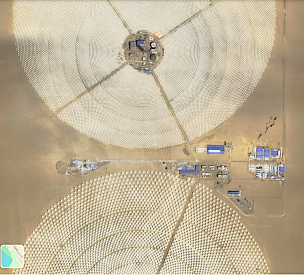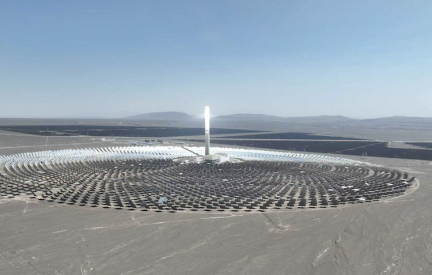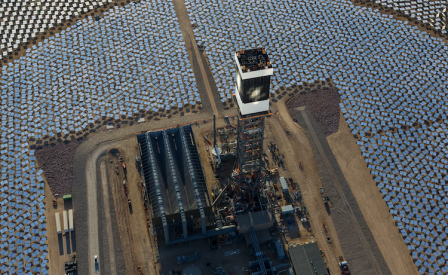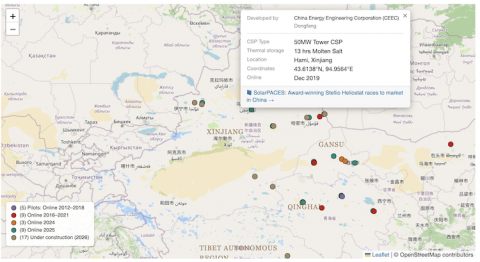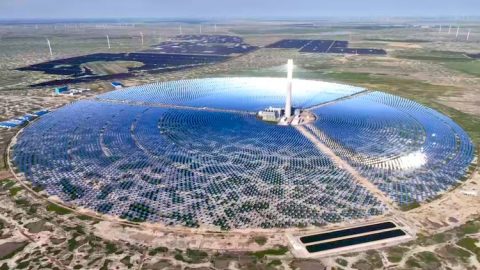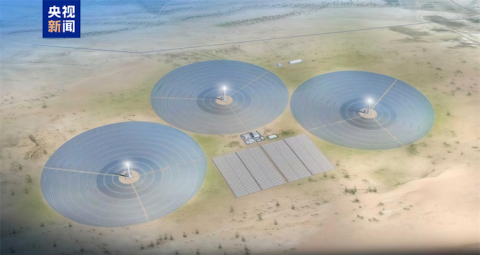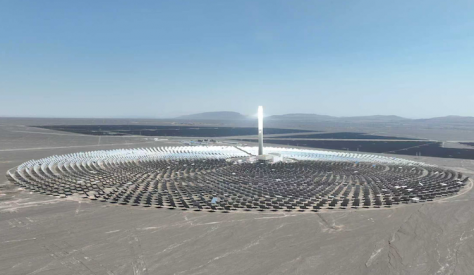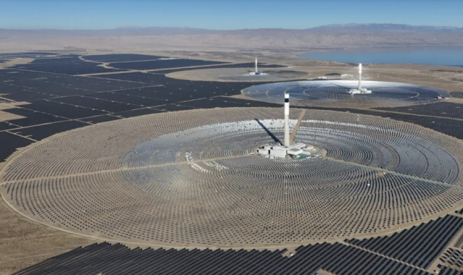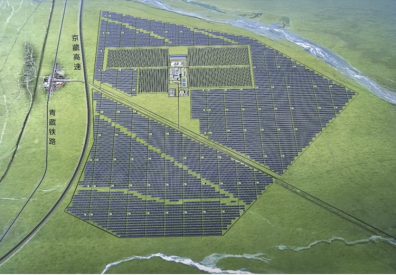

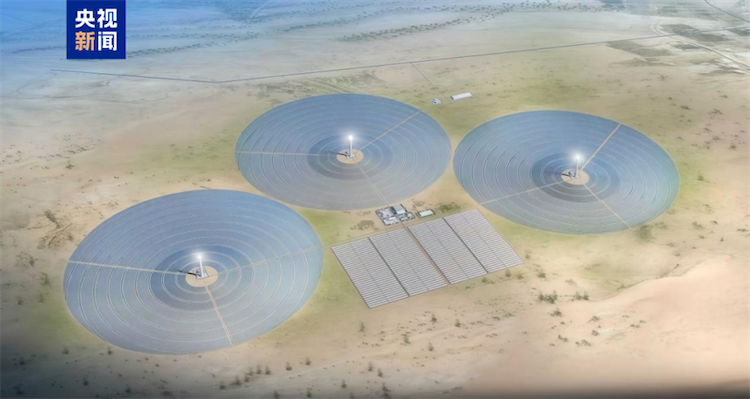
The 350MW solar project at Wutumeiren in Qinghai Province by CGN will combine 3 Towers with Trough CSP
[Ed: Till now, Concentrated Solar Power (CSP) using parabolic Trough technology has been limited in efficiency by the temperature limit of the heat transfer oil to around 400°C. Tower CSP with molten salts can achieve 565°C without degradation, for greater efficiency. But raising the temperature of heat transfer fluid for Trough could be a game changer, because Trough projects are not physically size-limited to 100MW like Tower, where reflected sunlight must travel from even the outermost ring of heliostats to the solar receiver on the tower.]
Source: China Solar Thermal Alliance:
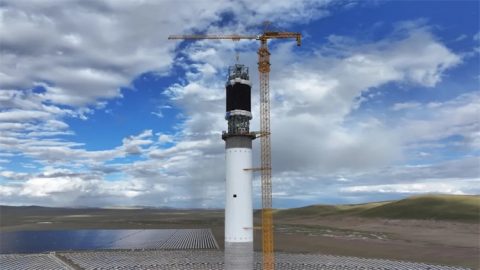
On June 16, 2026, the world’s largest single-unit thermal storage capacity and heliostat field area concentrated solar power (CSP) plant—the CGN Golmud 350 MW CSP Demonstration Project—officially broke ground at the Wutumeiren Solar PV and CSP Park in Golmud City, Qinghai Province.
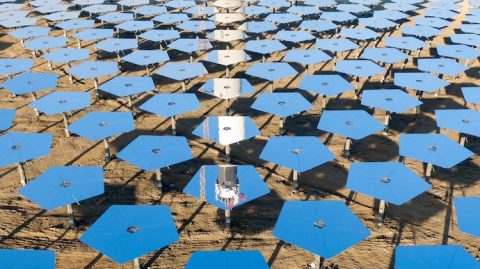
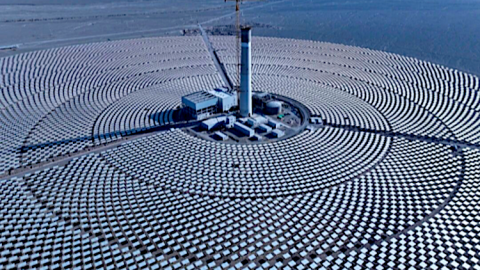
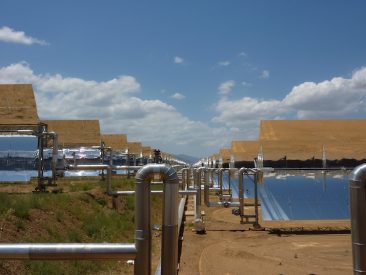
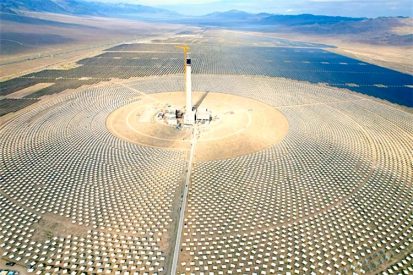
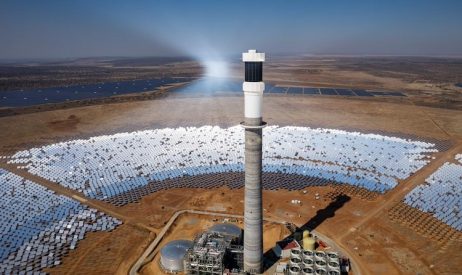
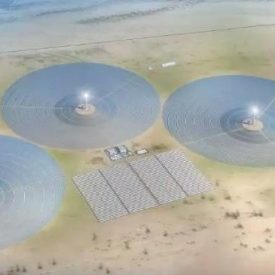
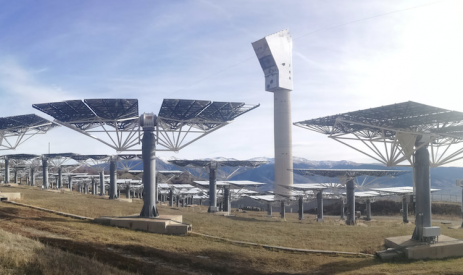
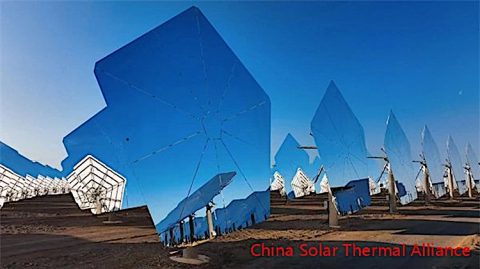
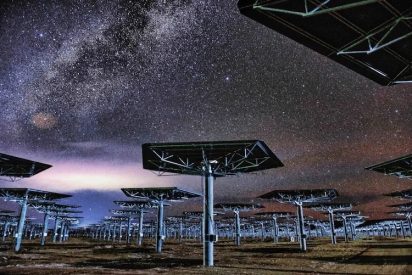
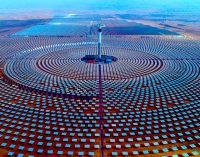
The project features a total heliostat field aperture area of 3.7 million square meters, equivalent to the size of 518 standard football pitches, comprising three tower-type mirror fields of 1.1 million square meters each and one parabolic trough mirror field of 400,000 square meters. The trough field exclusively utilizes CGN’s self-developed 8.6-meter large-aperture trough collectors.
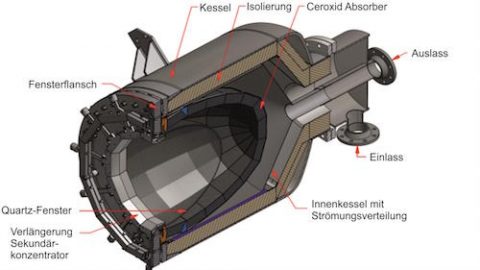
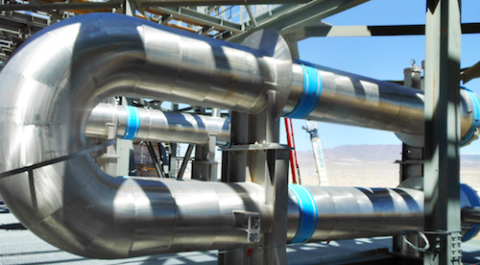
The project adopts trough-type solar thermal collection technology, which completed technical validation on April 21 this year at the Delingha Solar Thermal Test Base.
The system achieves a concentration ratio of 107.5x, enabling stable operation from a 290°C inlet to a 550°C outlet, with a thermal storage temperature difference of 260°C—2.6 times that of traditional heat transfer oil systems.
The core components of the entire equipment set have achieved 100% independent control of key technologies.
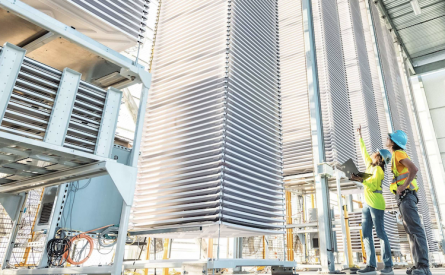
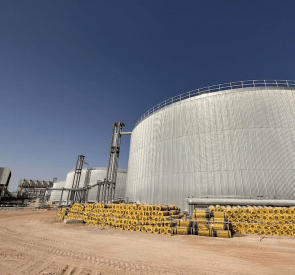
The project is equipped with a 15-hour large-capacity molten salt thermal storage system with a storage capacity of 11,747 MWh, making it the CSP project with the largest single-unit thermal storage capacity globally. It enables stable power generation with excellent grid peak-shaving flexibility, effectively improving new energy accommodation efficiency and power supply reliability across the Qinghai grid. Upon completion, it is expected to generate 1 billion kWh of electricity annually, equivalent to saving 320,000 tons of standard coal and reducing CO₂ emissions by 860,000 tons, delivering significant ecological and environmental benefits.