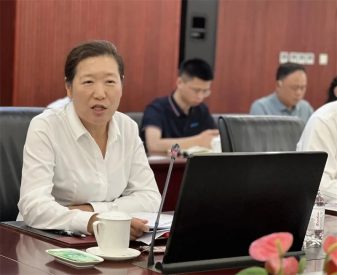

An interview with Lauri Myllyvirta, co-founder and lead analyst of the Centre for Research on Energy and Clean Air, an independent research organization headquartered in Finland with staff across Europe and Asia, about China’s 15th Five-Year Plan.
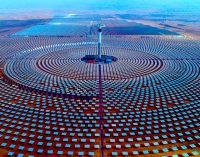
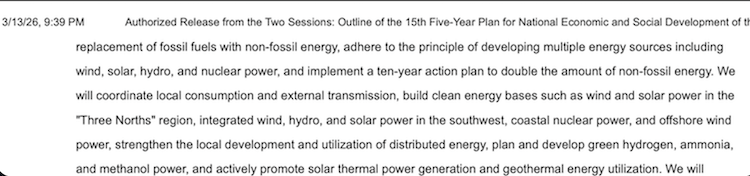
SK: I was surprised that in this 15th Five-Year Plan, concentrated solar thermal was sort of singled out, ‘to actively promote’ it in Chapter Seven – Building a Modern Infrastructure System, Section 2. I don’t think CSP was even mentioned in the previous plan.
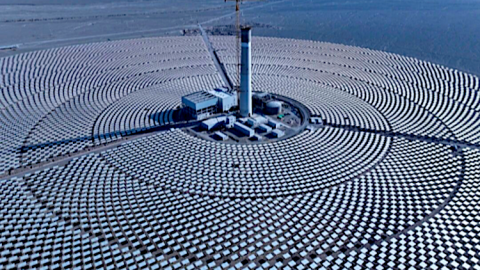
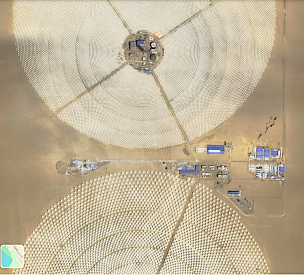
LM: The whole fact that concentrated solar thermal made it into the overarching Five‑Year Plan was a bit of a surprise. The overarching plan for economic and social development covers everything the government does, so it is not a given that any single energy sector technology gets a mention. Last time, there was a mention of nuclear, which was notable, and that resulted in this acceleration of having around 10 gigawatts of nuclear projects get approv or it paved the way for that. So it was significant and unusual that solar thermal made it there, given its lighter role in China’s energy system.
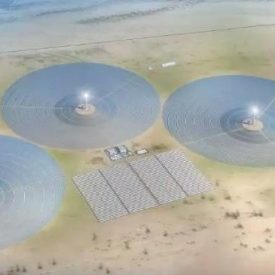
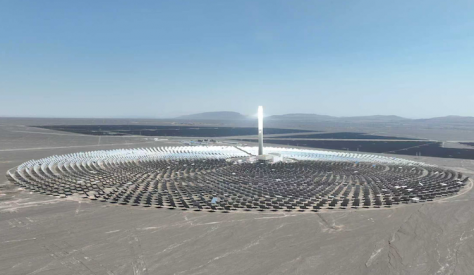
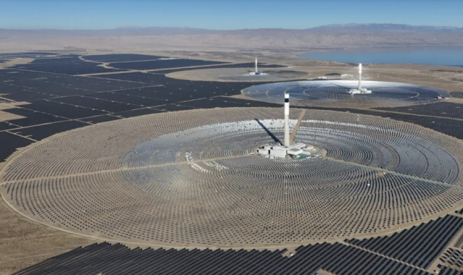
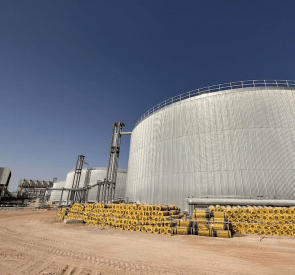
SK: It seems like more and more of the 1GW solar plants parks that they’re building typically have like 900 megawatts of PV and 100 megawatts of CSP, and more and more now allow the PV to electrically heat the thermal storage, so if they’re letting them store electrons directly, it seems like it’s a way of dealing with the problem of curtailed PV, which can grow clean energy fast because it’s so cheap and so easy, and yet it gets curtailed if there’s not enough transmission to move it off the site quickly when it’s generated. From its beginning, China required every CSP project to include over 8 hours of storage. So it can pick up after batteries, which respond instantly but are short-duration.
LM: In terms of having different duration storage, that does make sense. China added more than 60 gigawatts of batteries last year. There is enough transmission, but there is not enough flexibility, or the system is not operating flexibly enough to absorb PV at times. So shifting it over time makes sense.
SK: Other countries see that need too. The US DOE funded long-duration storage research.
LM: Still, getting the economics to stack up against batteries for doing the same thing is not trivial, but it does seem like they clearly see room for CSP in the system.
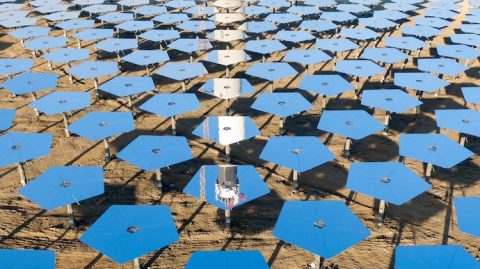
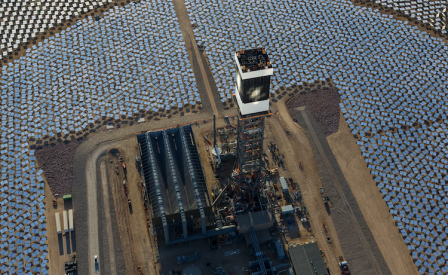
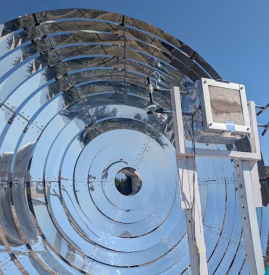
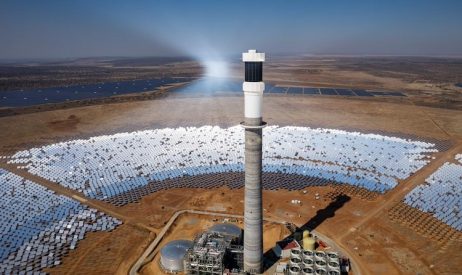
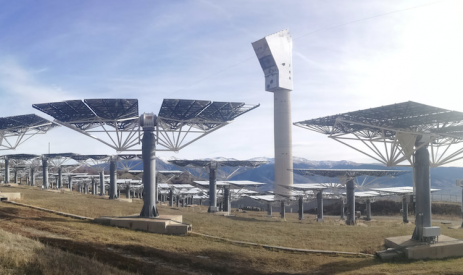
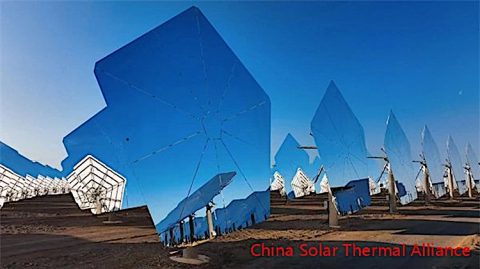
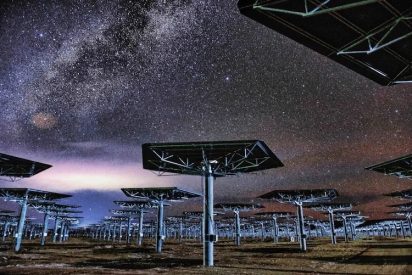
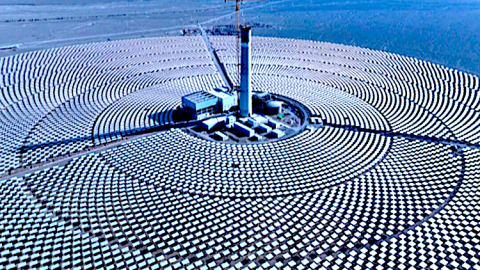
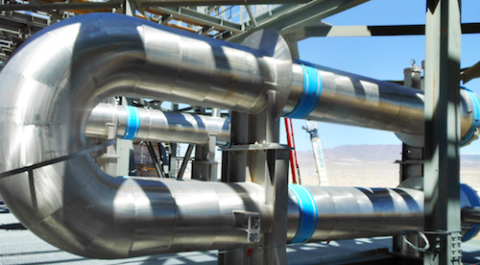
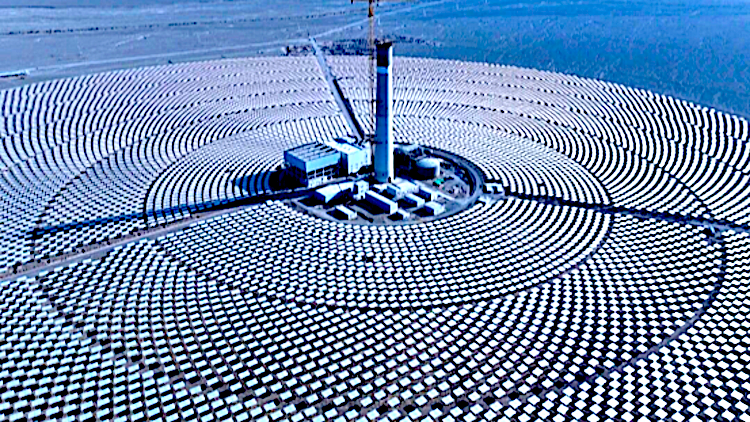
SK: Thermal storage is much cheaper than batteries over lifetime. But just not quick and easy to pop on the grid like a battery. You need a whole thermal power plant like a gas plant, plus a giant heliostat solar field, plus a solar receiver, plus the storage – whereas you can just hook up a battery in a box. Like in California, batteries are really taking care of their evening duck curve.
LM: That is increasingly happening in China as well. There is less transparency or visibility to what is actually happening in the power system hour to hour, but China added more than 60 gigawatts of batteries last year. We know the gigawatts of infrastructure that are there; the gap is knowing how it is being operated hour to hour, because all the data are just monthly aggregated. But the reported utilization of the battery capacity improved, so it seems that they are now being cycled daily to do exactly that function of shifting solar to the evening peak.
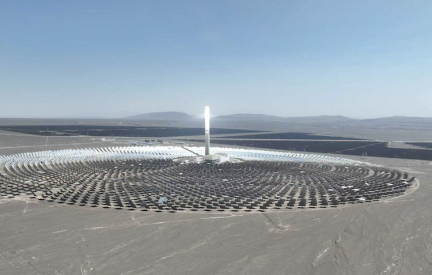
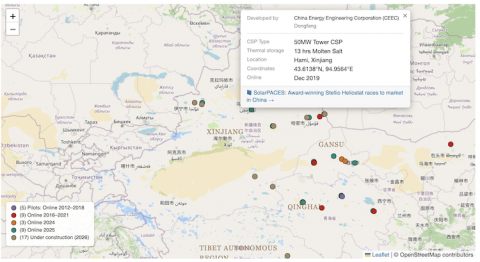
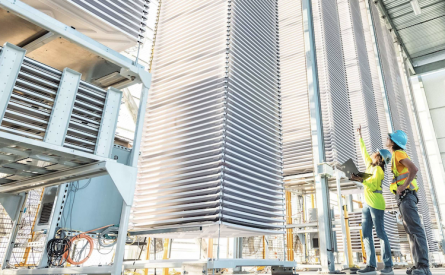
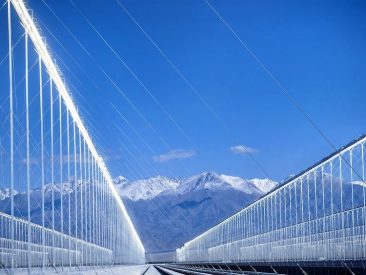
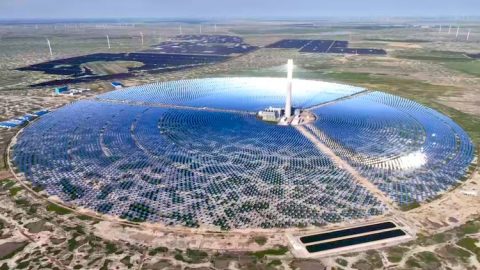
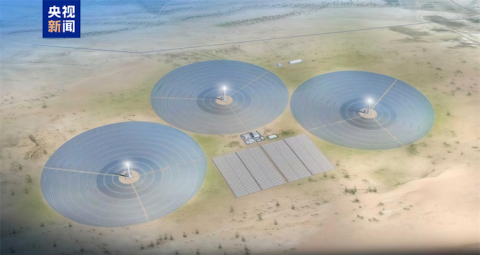
SK: Still, the 15 gigawatts in the NEA opinions from December. It would be a huge jump; about 150 100MW Tower CSP plants, for example. China already leads the globe, with like 45 CSP plants online or under construction. But tripling that?
LM: First of all, I realize that 15 gigawatts is big for the industry; for China’s energy system, it is very, very small. If you look at it from the power system perspective, it does not seem like something at a scale that warrants a mention in the Five‑Year Plan. So there must have been either strong interests or some kind of rationale that did not get articulated.
SK: China has been trying to make coal provide storage, but that’s a terrible use of baseload plants. CSP is designed to dispatch on demand from the thermal storage, and the turbines ramp up in minutes. But coal turbines can take 8 hours to ramp up.
LM: It is certainly sub‑optimal, but that is the compromise policymakers are pursuing. The coal‑fired power plants are operated not in a pure baseload mode, but in a pretty inflexible mode, and then you have storage and transmission absorbing the variation in wind and solar more than the coal plants do.
SK: How about other policies to reduce coal? I’ve heard that China has adopted a merit‑order‑type approach like Germany’s, where renewables, with zero fuel costs, have priority on the grid.
LM: In theory, yes. But in practice, when the financial incentive is not there, coal plants basically make a medium‑ or long‑term contract for most of their generation and get a price that is fixed in that contract. When there is oversupply in the market, coal plants do not see low or negative prices and can still generate profitably if they can get their power dispatched. It has been very clear that grid operators do not follow the merit order when it would require coal plants to ramp up and down aggressively. There is much more arbitrage going on.
SK: So the coal contracts take precedence?
LM: Yes, the coal-fired power plants don’t operate on a spot market, so they don’t face low or negative power prices when there’s oversupply on the grid, and that’s why they operate quite inflexibly, so they’re not ramping up and down as much as they should. Generation from coal plants is contracted ahead of time, so when you have a lot of wind or solar supply, or lower demand than expected, then there is too much coal‑fired generation that has been contracted, and buyers face penalties for not using it. That is when wind, solar, and even nuclear or hydro get curtailed more. The transition from coal‑fired power and the transition to flexible operation of coal‑fired power have been mired in that conflict of interest for quite a while. I think the more likely way forward is that the institutional problems will persist and there will be more technical or engineered solutions than a perfect market‑based solution. That is where, for example, the big CSP push comes in. China is investing a lot more in electricity storage than they would if the power system was operating efficiently, because when you have all these rigidities in the system, then you need storage to make up for them.
SK: Yet China did reduce that very visible air pollution you used to see in old photos.
LM: The big reduction in air pollution took place a decade ago, especially between 2015 and 2017. There was an enormous reduction, and then a further push towards the Winter Olympics. There was a bit of a rebound in 2023, but after that Winter Olympics push, there has been much less momentum. The air quality targets for 2030 just came out, and they are quite modest overall, except around Beijing, Shanghai and Xi’an, so there is this element of prioritizing flagship cities and regions around them. But the big reductions over the previous decade were very much real and nationwide.
SK: How did they get emissions down?
LM: It was a combination of two things. There was a huge improvement in emission controls in power plants and industry, especially, and that required a big improvement in environmental governance. At the same time, growth in coal consumption slowed down from 2012 onwards, and that made a big difference. In the decade before that, coal consumption was growing at 10% per year, and even if you improve pollution control technology, that kind of growth was just overwhelming those improvements.
They absolutely do install pollution‑control devices. The retrofit programs over the past decade have been unlike anything anyone else has done in terms of scale. Air pollutant control requirements for coal plants, and for steel and cement especially, are among the strictest in the world.
SK: The US once tried to make coal plants put some kind of CO2 filter in the flue to enable ‘clean’ coal, but the industry wouldn’t. They said it’s too expensive. And US plants faced with costs of air pollution retrofit controls tended to close.
LM: China’s coal plants survived financially despite putting in these controls because they got new tariff components. There was a two‑tier system where you get a component added to your tariff if you comply with the national standard, and then there is the so‑called “ultra‑low” standard, which is much more demanding. If you meet that, you get a larger bump‑up to the tariff. There are even companies that do this as a service: they take those extra tariff components and finance everything with them. For every kilowatt‑hour they generate, plants get extra money. That is not the way we would ideally want to do it, because it is basically a subsidy to coal plants, but it did get the job done. Ideally, you would want to do it in a way that does not skew energy choices towards coal – a way that makes clean energy relatively more attractive, because that is also a way of avoiding air‑pollutant emissions. But the priority was getting coal plants to install and run the controls.
SK: And did they?
LM: Installations already started around 2005, but the first problem was getting plant operators to actually run them. That is where improvements in environmental governance came in. Around 2014–2015, there was a big breakthrough: enforcement got so good that most plants had to actually follow the standards.
The official line now is reasonably control coal-fired power capacity and generation, which is so there’s kind of a policy range of quality settings from from something like “currently promote” to “strictly control“ and so reasonably control is means that further coal-fired capacity expansion is maybe being discouraged a bit but not been stopped completely, which is a contrast with the previous five years, when coal-fired capacity was was basically aggressively promoted.
Something like 200 gigawatts of new coal plants were approved. There was a bit of a panic in 2020 and 2021 when power demand spiked, and there was a lack of coal, as in the fuel, and there were power shortages, and there was what I would describe as a bit of a panic reaction to make sure that those power shortages wouldn’t happen again. I would have argued that the other responses would have been enough without the additional coal-fired power plants, but the policy makers were not prepared to make that bet, so China still has a significant amount of new coal plants under construction, even though last year saw record decommissioning of coal plants, and so it’s in that context that the policy makers are now saying that we should be a bit more cautious about permitting more capacity.
SK: Yet you are confident CO2 emissions will go down in the world’s biggest power market?
LM: Emission reductions will predominantly come from reducing the use of oil and gas, and coal outside the power sector. A bit over 25% of China’s energy mix come from oil and gas, so there is there is a bit to do there, and also within coal use, there is still a very sizable portion that is outside of the power sector, so that that if you shift more of the industrial energy use from direct use of coal to the use of electricity, then you have more space within the emission budget for coal-fired power. So I have confidence that CO₂ emissions will go down overall, at least in line with the official targets: peaking before 2030 and then starting to come down from there. I would expect little to no increase before that peak, and the best‑case scenario is that emissions in effect keep coming down from now on.