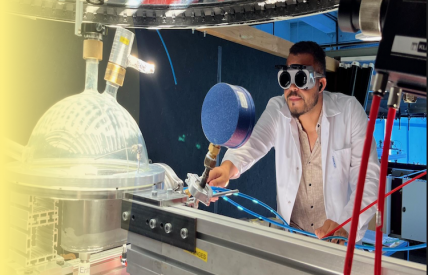


Deputy GM and Chief Engineer Dai Zengli of SEPCOIII welcomed CSTA to the launch.
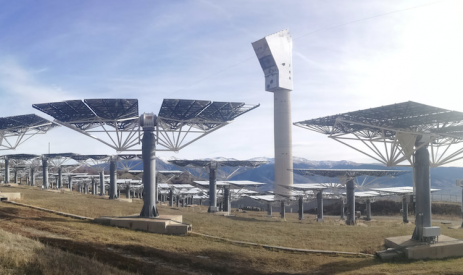
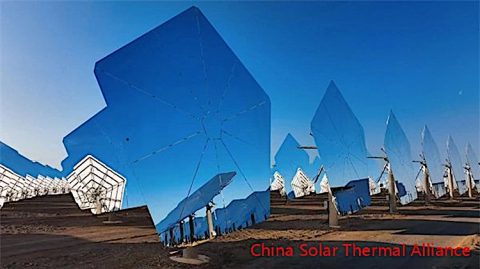
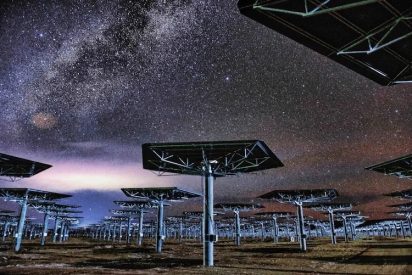
Qingdao, China — July 2, 2026 — SEPCOIII has commissioned a new flexible assembly line for high-precision wind-resistant heliostats at its Hongfeng Equipment subsidiary, adding standardized, large-scale heliostat manufacturing capacity.
According to SEPCOIII’s technical report on the line, the core advances are in ultra-high wind resistance, high-precision calibration, and flexible compatibility across multiple heliostat specifications, enabling efficient mass production.
SEPCOIII, a subsidiary of PowerChina, has more than 20 years of experience in solar energy and has served as EPC contractor on major CSP projects within China and internationally, including the NOOR II and III complex in Morocco and Redstone in South Africa.
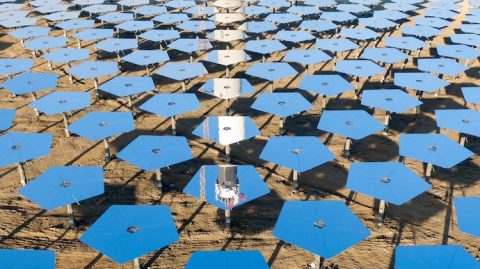
The new line builds on the company’s earlier PCS3-SH Gen.1/2 small heliostats and Gen.3 medium heliostats, and is designed to mass-produce medium heliostats for the large-scale CSP plants being deployed in China.
The company says the line will improve delivery speed and cut manufacturing costs, and it plans to expand sales of complete domestic solar thermal equipment overseas as well.
CSTA Chairman Wang Zhifeng, who attended the launch with a delegation from CSTA, said CSP’s long-duration storage and stable output make it a key technology for grid stability. The CSTA delegation also discussed collaboration ahead of China’s 15th Five-Year Plan period.
The industry’s shift toward standardized, lower-cost deployment at scale is raising the bar for equipment precision, wind-resistance performance, and production efficiency, Wang said, noting that CSTA will continue supporting industry collaboration on technology iteration, standards development, and market expansion.
SEPCOIII Deputy General Manager and Chief Engineer Dai Zengli called the new assembly line a milestone in intelligent manufacturing for solar thermal equipment and a collective industry achievement, and thanked . CSTA for attending the launch. She said domestic CSP manufacturing processes and equipment now match or exceed international standards, and urged deeper collaboration across the industry chain to advance implementation.
Source: CSTA