
CGN’s PV+CSP hybrid makes first connection to Tibet grid at Ngari
Nov 6:
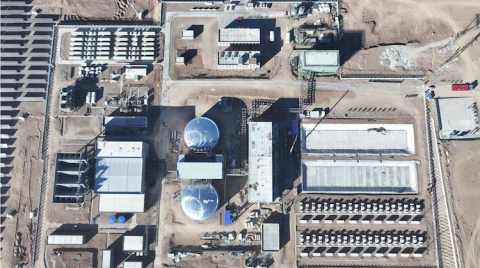
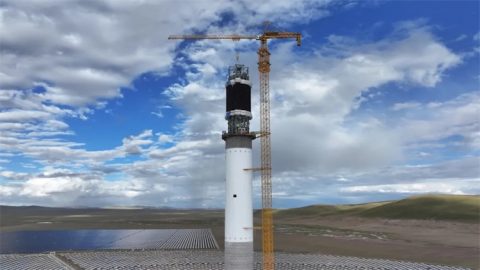
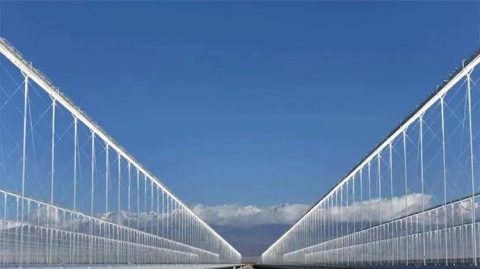
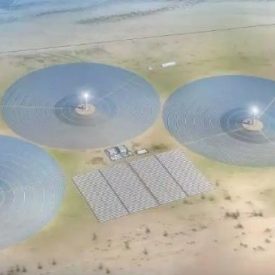
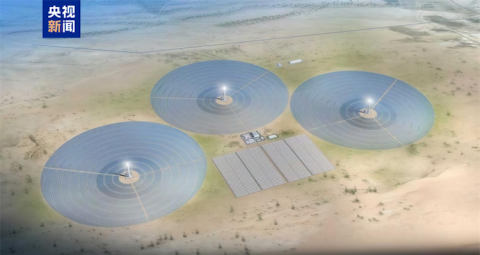
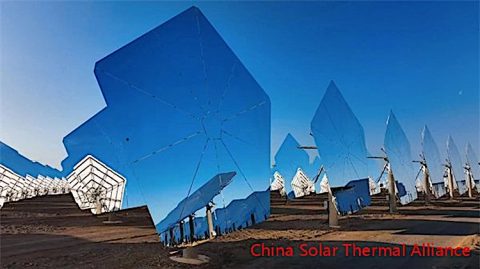
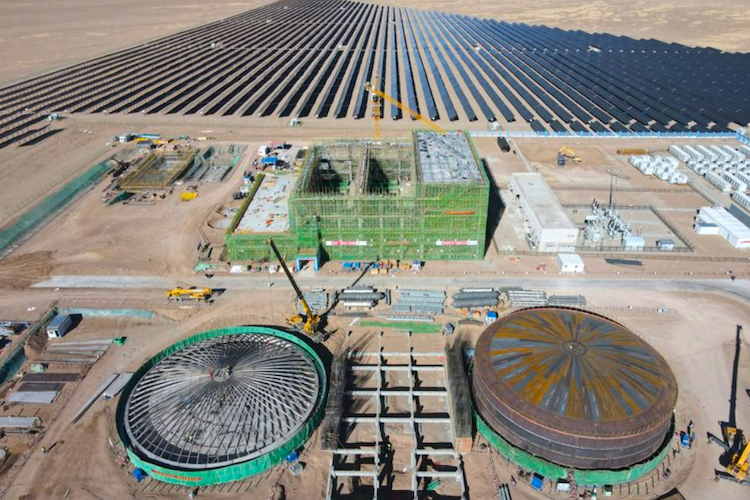
Today, the first unit of the trough CSP+PV project in Ngari Prefecture, Tibet, connected to the power grid.
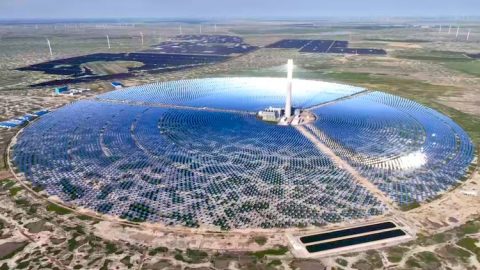
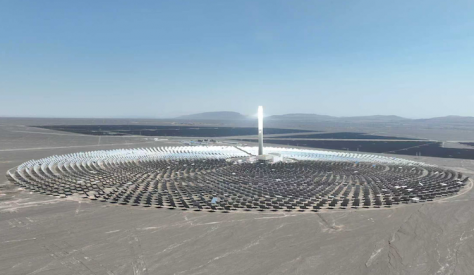
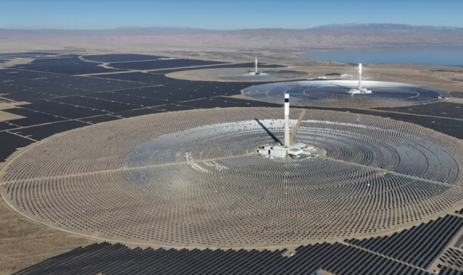
This is one of several CSP projects developed by China General Nuclear (CGN) to innovate in various ways to deal with freezing conditions like in far northern Baicheng, by raising the temperatures in trough CSP or by hybrids and larger capacity thermal energy storage. The 350MW high temperature trough/tower combination CGN is building at Wutumeiren in Qinghai province will have, at 15 hours, the world’s longest duration thermal energy storage.
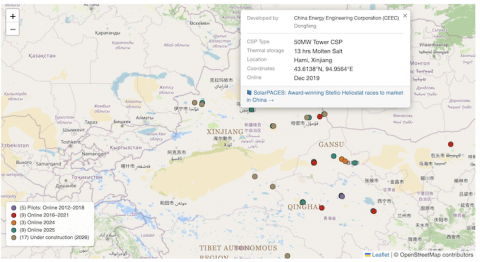
Together with its other CSP-PV hybrid at Dangxiong County, this project at Ngari is one of CGN’s two solar hybrids designed to cope with Tibet’s extreme cold at very high altitudes.
CSP-PV solar hybrid
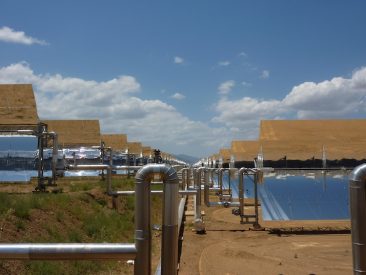
At Ngari, the total installed capacity of 150MW comprises 50MW of trough CSP and 100MW of PV. The PV also supplies electric heating to the thermal energy storage that is normally fed by a CSP plant alone.
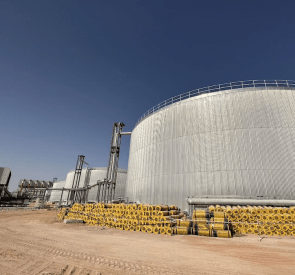
In this case, a 205MW molten salt electric heating system feeds the CSP’s thermal storage tank from the PV using its excess electricity when not needed on the grid.
Surplus electricity from the PV during the day is first partly stored in an electrochemical energy storage system, while the remaining surplus electricity is sent to a 205MW electric heater to heat the liquid molten salt stored in the molten salt tank.
As in a CSP-only power plant, during both day and night-time operation, the high-temperature molten salt from the thermal energy storage drives the steam generation system to produce high-pressure steam, which powers a 50MW steam turbine generator unit for stable electricity supply.
Once fully operational, its expected generation is around 270 GWh of electricity annually. More than 500 locals worked on initial construction.
Why a hybrid?
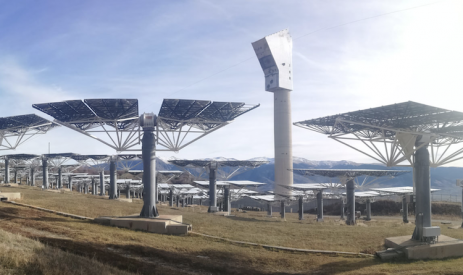
Temperatures at this altitude would be a deciding factor in its dual-feed hybrid setup. It is the world’s second-highest CSP project at 4,300 meters, (CGN’s other hybrid at Danxione is highest at 4550 ft) where temperatures can drop to below freezing. Normally, trough CSP runs at lower temperatures, using oil as the heat transfer fluid, but CGN is investigating high temperature trough, by using molten salts for both the heat transfer and storage, like tower CSP.
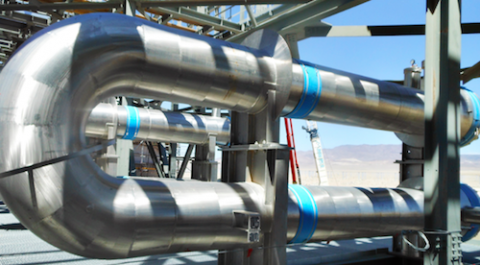
But in trough CSP, with molten salts heat transfer fluid, it risks freezing if it falls below 290°C as it passes through the pipes circulating the liquid throughout the solar field. So the extra boost from the 100 MW of PV would be in order to guarantee consistently high temperature generation at Ngari’s isolated high altitude despite temperatures as low as -13°C.
This is China General Nuclear’s third project focused on extremely cold climate operation by enabling very high temperature operation in trough CSP using molten salts for heat transfer, which until now has been limited to generating power at 400°C, the limit with oil for heat transfer.
Tibet inaugurates a true hybrid CSP and PV project on top of the world
China General Nuclear’s 100 MW Jixi Tower CSP begins delivering power from freezing Baicheng
China General Nuclear introduces novel high temperature Trough with Tower CSP in Qinghai
China General Nuclear (CGN) proposes first 100 MW Tower CSP in Brazil