

ReFuelEU creates first market for solar fuel
The EU in its ReFuelEU legislation has mandated that by 2050, just 24 years from today, 70% of airline fuel at EU airports must be sustainable airline fuels (SAF).
Fully half of this 70%; 35% must be a synthetic SAF or Renewable Fuel of Non-biologic Origin (RFNBO), supplied from a drop-in liquid fuel produced from air-captured carbon dioxide and hydrogen derived from water using renewable energy.
The other half of the SAF requirement lumps together all the other eligible SAF technologies; various biofuels derived from waste fats and oils, various alcohols derived from agricultural crops like corn and waste biomass, and various sources of recycled hydrocarbons.
The legislation recognises that RFNBO is the only truly sustainable longterm fuel
Divvied up between so many technologies in the second 35%, this makes each one individually far less potentially attractive to investors than RFNBOs. The more advanced and familiar technologies do not get the boost that RFNBOs get.
RFNBO also gets more financial support within ReFuelEU. Fully 95% of the price gap between conventional aviation fuel and RFNBOs is to be covered by public funding, while only 50%-70% of that difference will be covered for the other technologies.
“This is the one mandate worldwide that actually creates a market for solar fuels,” noted Xavier Lara, CEO of Endura Energy and recipient of the SolarPACES 2022 Lifetime Achievement Award.
“Technology was never the bottleneck for solar fuels; bankability was. ReFuelEU changes that, because a binding quota with penalties behind it turns airlines into long-term buyers, and long-term buyers are what project finance needs. For the first time, a solar fuels plant can be financed against a market that exists by law, not against a promise,” said Lara.
Europe’s mandate for sustainable aviation fuel has for the first time created a large, legally established market for fuels made using renewable energy, from captured CO2 and green hydrogen.
What’s needed to meet the RFNBO standard
To reproduce jet fuel; the kerosene that airlines run on today, you need to first produce carbon monoxide (CO) and hydrogen (H2). These are the defining, combustable components of pure syngas, from which jet fuel, kerosene, can be made.
The EU requires that to meet the RFNBO standard, the carbon monoxide must be derived from CO2 captured directly from air (DAC) and the hydrogen must be derived from water H2O, using renewable energy.
The EU’s RFNBO rules do not limit the renewable energy to electricity-driven electrolysis to generate the hydrogen.
Regulation 2023/1184 explicitly notes that its methodology applies to production of hydrogen by electrolysis “and analogously for less common production pathways.” Concentrated solar thermal is renewable energy that supplies and stores heat for thermochemistry.
In the well-known renewable electricity route, water electrolysis produces the hydrogen from water. (A separate process, the Reverse Water Gas Shift (RWGS) could then generate the carbon monoxide from carbon dioxide.)
But in the renewable heat route, the solar thermochemical redox cycle can produce both the hydrogen and carbon monoxide in a single process, from the same eligible feedstock of air-captured carbon dioxide and water. So solar thermochemistry eliminates the need for that extra step because the redox cycle can generate both hydrogen and carbon monoxide continuously.
“The thermochemical route needs very high temperatures, around the clock if possible. That is exactly what concentrated solar with thermal storage was built to do,” Lara pointed out.
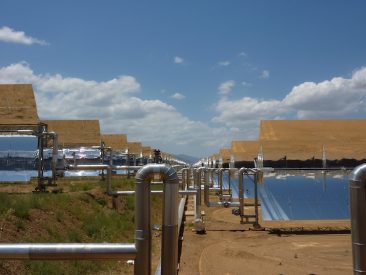
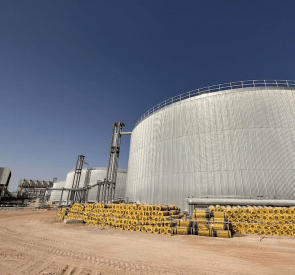
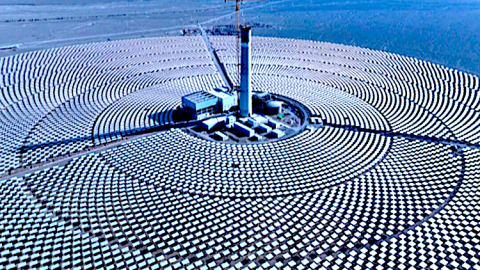
We first learned at commercial scale – for power generation – how to store heat in order to run reliably round the clock, with the first molten salt CSP plants like Gemasolar in 2011. Now the many new Chinese CSP projects are breaking long duration generation records. So, for power generation, concentrated solar technology is proven commercially. The thermal energy storage is also crucial for its more nascent thermochemistry applications – like making solar fuels.
“The same lesson applies here: without storage there is no firm supply, and without firm supply the reactor and the Fischer-Tropsch unit downstream never reach the utilisation that makes the numbers work.”
How solar thermochemistry makes RFNBO solar jet fuel
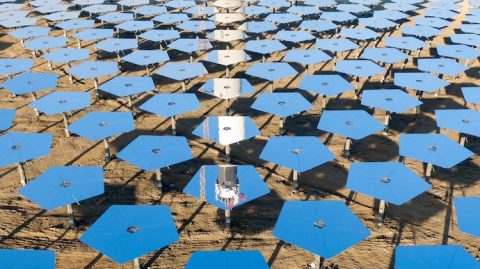
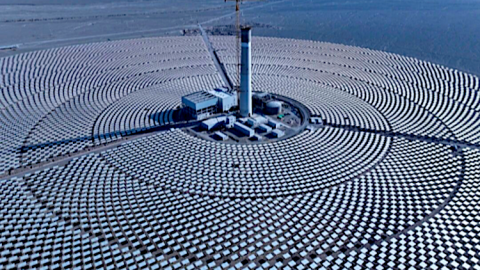
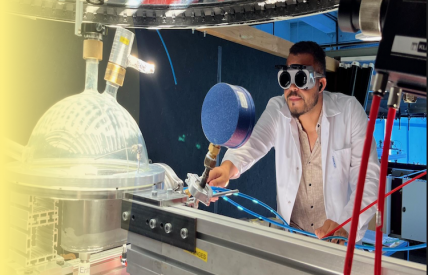
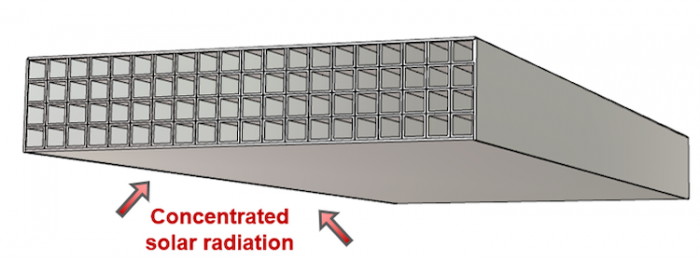
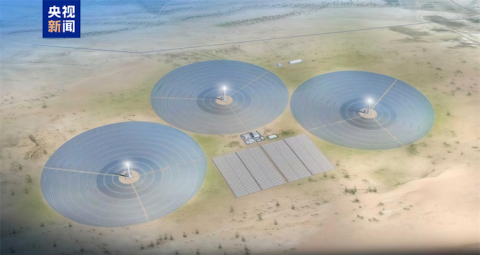
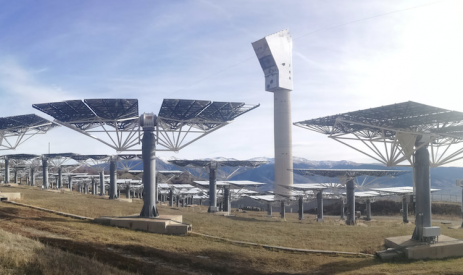
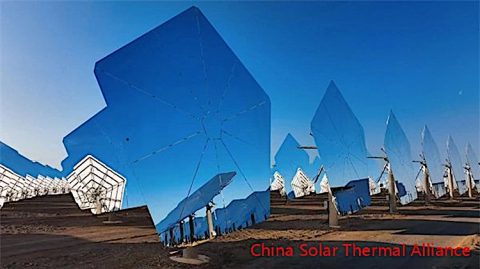
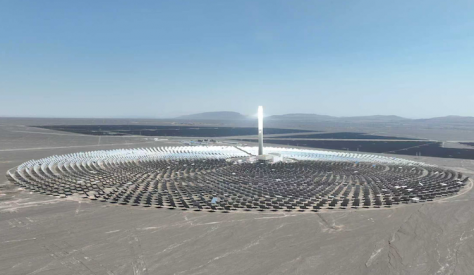
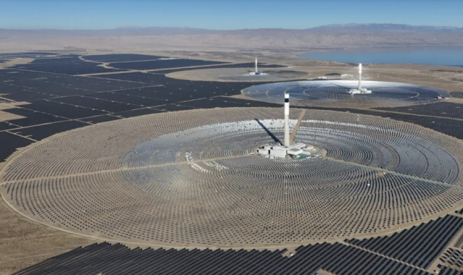
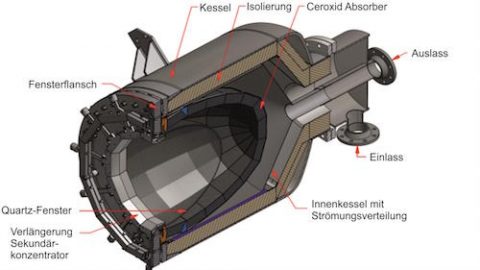
In the redox solar thermochemistry process to make syngas from carbon dioxide and water, ceria is placed inside a solar reactor that is heated to 1500°C by intensely focused sunlight from multiple mirrors or heliostats..
Inside the reactor, the high temperature causes the ceria to shed oxygen from its structure. Then, at a lower temperature, water and carbon dioxide are fed in and the now oxygen-starved ceria strips the oxygen from both to replenish its own structure, generating the resulting carbon monoxide (CO) and hydrogen (H2); syngas.
With the ceria’s oxygen restored, it is heated again, and the cycle is repeated, each time the heat causing the ceria to lose its own oxygen, replenishing its oxygen from the introduced water and carbon dioxide, so generating syngas in each round.
This syngas is then fed into the Fischer-Tropsch process to convert it to syncrude, which is then refined into aviation fuel, the same as the fossil-derived fuel used today.
Research but no development
Decades of internationally funded research have proven every aspect of this thermochemical pathway at research scales. Solar receivers, reaction chambers and heat transfer technologies have been fine-tuned, thermal energy storage has been advanced, and using AI, aiming strategies for heliostats have been perfected.
Under its Technology Collaboration Programme with the International Energy Agency, SolarPACES has advanced solar fuels in collaboration with top international research institutions, including ETH Zurich and DLR in Europe.
Solar fuel technology has been demonstrated. But without any legislative push, investment has not appeared. Now that the EU has stepped up with this visionary RFNBO requirement, that may be about to change.
ReFuelEU has potentially changed the investment landscape enough that a technology which has been technically demonstrated but struggled to attract capital now has a defined market to target.
“The gap now is the first commercial plants. Research has de-risked the chemistry; what investors need is a first-of-a-kind project with a long-term offtake from an airline or a fuel supplier, and a financing structure that shares the scale-up risk. The mandate is the demand; the first projects have to prove the supply,” said Lara.
The foresight of the EU legislation
Intercontinental flights cannot feasibly be electrified at scale. Commercial air travel will need liquid fuels long after most heat and power has been supplied by electricity. But today, about 85% of sustainable aviation fuel produced globally (mostly from corn ethanol incentivized by US subsidies) still relies on the biofuels pathway, which is feedstock-constrained.
The RFNBO route, sourcing hydrogen and carbon from just air and water, processed into jet fuel with renewable energy could actually be sustainable over centuries. ReFuelEU is more ambitious than any other jurisdiction has committed to.
And importantly for the solar fuels sector, its production is not limited to the EU. These standards apply whether the fuel is manufactured inside the European Union or imported from international producers outside the bloc. Both Western Australia and the Texas panhandle have the investment environment, the solar resource, and the shipping infrastructure for producing and shipping the resulting solar syncrude to the EU.
“The best sites combine strong direct sunlight, a port and the rule of law: the Atacama, Western Australia, the US Southwest, the Middle East and even Morocco,” Lara noted. “Since the RFNBO standard applies to imports, Europe does not need to make the fuel at home; it needs to buy it, and the sunbelt can sell it.”
How Synhelion’s solar jet fuel started – an interview in 2017
How Much Land Would Solar Thermochemistry Need to make All Our Aviation Fuel?
How can Synhelion’s solar receiver achieve such high temperatures?
3D-printed ceria is a game-changer to increase solar fuel efficiency